Showing posts with label Animal Systems 1. Show all posts

Saturday, 6 October 2012

Dairy Cattle Production


Hello, in this post we’ll be discussing the dairy industry in Australia. We’ll take a look at the breadth and width of the dairy industry, the general principles of milk production and the common management practices used in this industry.

Over the last thirty or so years, the average annual milk production per cow has risen from about 2800 litres in 1980 to about 5700L now.  This increase in production is mainly a result of improved feed systems and the fact that cows have been bred for a large milk production. Victoria produces about two thirds of Australia’s total milk production with New South Wales producing about 10% of total production and the other states making up the rest.

Supply companies buy milk from farmers and then sell the milk to supermarkets. These companies pay farmers according to the attributes, this includes: milk composition, milk volume, and bulk milk somatic cell count (BMSCC – it is the number of leukocytes in the milk and this indicates inflammation). In terms of composition, the farmers are paid according to the proportions of fat and protein in the milk (with protein being 2.5 times more valuable than fat). Some companies prefer to collect large volumes of milk from producers and so will pay the highest price per litre when collecting over a certain volume of milk. For example, they would pay the most if collecting over 2700 litres). Farmers are also paid the best prices for grade 1 milk (milk with a BMSCC of less than 150,000)

Principles of Milk Production

Before we go on, it is useful to understand some terminology related to milk production first. Cows have to have a calf in order to produce milk. The first milk that a cow produces after calving is known as colostrum and lasts for the first three days after calving. The period of time between calving and when a cow ceases to produce milk is known as lactation. “Days in Milk” (DIM) is the number of days that they cow has been milking during that period of lactation. Cows reach peak milk production 5-8 weeks after calving and then milk production is gradually reduced until no milk is produced. At this point, the cow is called “dry”.

Factors Affecting Milk Production

The amount of milk a cow produces during lactation is dependent on several factors such as:

  • The Age of the Cow: annual milk production will increase until the 4th lactation is reached. After this time, production will plateau out. 
  •  Nutrition: It is essential that the cows receive the correct amounts of energy, protein, minerals, vitamins and water. There are three types of feed that can be given to dairy cows:

o   Pasture: this is cost effective but its energy, protein and fibre contents depend on the season. Thus, the farmer ensures that the cows calve at a time of peak pasture production.
o   Concentrates (grains, lupens, etc): these are quite expensive but are high in energy and protein and low in fibre.
o   Conserved Fodder (hay or silage): this is lower in energy and protein and higher in fibre and is moderately cost effective.
  • Disease Status: diseases animals produce less milk than healthy ones. 
  • Genetics: This plays an important role in increasing milk production. Farmers try to ensure that they retain and breed their best cows to the best bulls available and this can be done through artificial insemination. Offspring are thus genetically superior to their parents.
Overall, happy cows produce the most milk.

Milking

The harvesting of milk can have a large impact on the health of cows and the quality of the milk they produce. The design of laneways which guide the cows from the paddock to the dairy is important for cow health as the animals will need to pass through these four times a day (twice for each milking). Well-designed laneways means that cows spend less energy and time getting to the milking shed.

Milking sheds are also called milking parlours and three types exist:
  • Walk through: this is an old style or shed that is used by only a small amount of farmers today. They can be classified as a simple walk through or a step up where cows step up onto a platform. They were designed for milking small numbers of cows. 
  • Herringbone: This type of dairy is very common in Australia. They are designed so that on one side of the dairy cows are milked while on the other side cows are exit and enter the shed. 
  • Rotary: these are popular with large herds but are expensive to build.
Management Practices

Stock Identification

Stock identification is used to distinguish stock belonging to different farmers, to distinguish between different types of stock and to identify individual cattle. There are several types of identification that can be used:
  • Ear Tattoo: there are two types, both are permanent:
o   Registered mark: this ties in with the property’s identification code
o   Code identification of stock.
  • Ear Mark: A piece of tissue is removed in a specific pattern or area of the ear. These are also permanent and there are four types:
o   Registered mark
o   Year Mark
o   Animal Type Mark
o   Government Mark
  • Ear Tag: This is tied to the National Livestock Identification Scheme. The tags can be made from metal, plastic or rubber and are non-permanent as they can be lost or torn out from the ear. However, they are easier to read than ear tattoos. These tags use machine readable radio frequency identification devices (RFIDs) to identify cattle and the owner’s property identification code is linked to the device.
  • Branding: These can be registered brands or stock type brands. Three methods of branding can be used:
o   Hot Iron branding: this is easy to use but is very painful for the animal and permanently damages the hide. It is not used very much in the dairy industry.
o   Acid branding: this is a quick method but chemically burns the skin and may produce bad scarring. Scarring is irritating to the animal and may be difficult to read.
o   Freeze branding: this method doesn’t damage the hide and is less painful. However, hair must be clipped from the brand site and the brand needs to be held in place for thirty seconds. It also can’t be used on white pigmented skin.

Reproduction

There are a few different types of calving systems at use in Australia. The year-round calving method is more common in warmer climates where pasture grows for most of the year and calving occurs for at least ten months of the year. Its advantage is that there is relatively constant milk production throughout the year and this means that there is constant income throughout the year. The disadvantage to this method is that it involves lots of work and the farmer is more restricted in terms of holidays etc. because the cows are always calving.

The seasonal calving method involves cows that all calve at a single period during the year. The benefit to this method is that calving occurs during a short period of time and the farmer is able to take time off during other times of the year.  The disadvantage is that milk production and thus income are not constant throughout the year. There is also considerable pressure during mating time to ensure that all cows become pregnant in a short time. 

In the split calving method, herds calve in two or three distinct time periods each year (for example during autumn and spring). This involves less pressure because there is a greater opportunity for the cows to calve.

Oestrus

Consistent signs of a cow in oestrus include: mounting other cows, standing to be mounted by other cows, hair is rubbed off the back of the cow over the pelvic area. In addition, cows may become restless, bellow more, and produce less milk when in oestrus.

Methods of Mating Cattle

There are three methods used to mate cattle:
  • Natural Service: this includes:
o   Paddock mating: the bull is put out with the cows for a specified period of time.
o   Individual Cow Mating: The bull is kept separate from the herd and an individual cow in oestrus is taken to the bull and mated.
  •  Artificial Insemination (AI): this is quite a popular method with Australian dairy farmers. Frozen, chilled or fresh semen is used by a trained technician or farmer to inseminate a cow.
  •  Combination of Natural Service and AI


That’s it for this post, see you next time :)

Friday, 5 October 2012

The Beef Cattle Industry

Hi :) In this post we'll take a look at the beef cattle industry in Australia. In particular, we'll go over the three production zones in Australia, the target markets for Australian producers, the management cycle of a beef breeding herd, as well as what BREEDPLAN is and how it works.

Production Zones

In terms of agriculture, Australia can be divided up into three major zones:
  1. The Pastoral Zone: mainly the humid and arid tropics and the arid interior with summer rainfall.
    • Cattle stations on very large pieces of land are found here. This zone relies on native pasture and casual water and low stocking densities exist although large herd sizes are present. Because of this, there are low labour costs because less management is required. Breeding occurs all year round among the Bos indicus cattle which are found here. Beef is exported mainly to Indonesia because it doesn't meet the requirements of premium quality beef demanded by the domestic market.  
  2.  The Wheat/Sheep Zone: This has about 300-600mm of annual rainfall and is in the temperate south of the country. Its growing and dry seasons are of equal length and it experiences mainly winter rainfall.
    • Smaller herd sizes in fenced paddocks are found here. Improved pasture is grazed by cows which are usually crosses between Bos indicus and Bos taurus. Cattle are slaughtered younger and sent to local markets.  
  3. The High Rainfall Zone: This is in coastal areas extending from the north-east coast to the south and south-west coastal regions. Here, the growing season is longer than the dry season each year. 
    • These set-ups produce high quality beef on small pieces of land which use improved pasture. Cattle are sent to local markets and because of the position near abattoirs and cities, transport costs are low. Increased stocking rates exist and grazing is controlled. 
 Target Markets

Australia's largest export market for beef is Japan. One third of Australia's exports go to the high quality Japanese market in the form of chilled grain fed or grass fed beef or frozen grass fed beef. Another third of exports goes to the low quality manufacturing grade US market. Beef is exported in frozen boxed form and is mainly used as ground or hamburger beef. Other exports go to Canada (low quality), Korea (high quality), Taiwan, and other South East Asian countries such as Indonesia, the Philippines and Malaysia in addition to the European Community.

Cattle are also exported live for two purposes: breeding females and 'Feeder' steers and heifers which are exported to Indonesia to be finished in feedlots. Cattle are also exported live to the Philippines and Malaysia.

Management Cycle of a Beef Breeding Herd

The chain of events of the management cycle is as follows:

  1. Mating: The start of mating depends on when the farmer wants the herd to calve. In southern Australia this is usually in autumn. Thus, if calving should start in the beginning of April, mating will occur for 9-10 weeks starting mid-June. About 2-3 bulls are put with every 100 females and every three weeks or so the bulls are rotated around the groups of cows. Any spare bulls are used in this process. 
  2. Pregnancy: If all goes well, 90% or more of the herd should be pregnant by the end of mating. If the cows are to be pregnancy tested this will occur 7-8 weeks after the end of mating. However, sometimes this may be done a few months later when the herd is mustered for weaning to avoid having to muster twice. This time is also a good opportunity to do a herd audit and reduce the stocking rate by culling. Cows are culled for non-pregnancy, old age, arthritis, poor foot conformation or damaged teats, as well as poor temperament or aggression. Culling usually means that the cows will be sold out of the herd and may reduce the size of the herd by 10-20%. 
  3. Weaning: the pregnant cows will also be looking after their calves. The calves are weaned and removed from their mothers. Fifteen to 20% of the best weaner heifer calves (young females) are kept to replace those that were culled. Calves that are excess to requirements are sold. 
  4. Feeding: This stage usually occurs in February when most pasture has dried off and has reduced nutritional value. Thus, at this time supplementary feeding occurs and continues for about 5 or 6 weeks until the break of season. 
  5. Buy In Bull Replacements: Bull sales usually occur from February to March and young bulls are bought to replace aged and injured bulls. The new bulls are kept on the farm until mating begins again in June. 
  6. Calving: This happens in April, May and/ or the first week of June. The farmer will watch the cows closely and assist with any difficult births. 
  7. Calf marking: This is done during May and June and calves are given a property ear mark, an ear tag, the males are castrated and all are vaccinated. Also at this time, the heifer replacements are weighed, treated for internal parasites and prepared for the upcoming mating. 

BREEDPLAN

 BREEDPLAN is a tool for the genetic improvement of beef herds that uses an Estimated Breeding Value (EBV). The system uses phenotypic data, the heritability of traits and the relationships between breeds to generate an EBV. This enables farmers to choose what kind of characteristics will appear in calves (eg. amount of fat, weight gain etc.)


That's all for this post, see you next time :) 


Monday, 24 September 2012

Chemical Properties of Soils

Hi :) In this post we'll be discussing the chemical properties of soils. I'll explain cation exchange capacity, why it is important and how it changes with soil type. We'll discuss the cause and effects of soil acidity as well as the causes of salinity. In addition, we'll take a look at the nitrogen and phosphorus cycles.

Cation Exchange Capacity

Cations are positively charged ions which are attached to the edge of clay particles or organic matter by electrostatic forces. Clay particles are flat crystals that are made up of many thin sheets which are held together by hydrogen or water. This creates a large surface area which allows more cations to attach to the clay particles which are negatively charged. The total capacity of a soil to hold exchangeable cations is known as the Cation Exchange Capacity (CEC).

CEC is important because it influences the ability of the soil to retain essential nutrients and acts as a buffer against acidification. In addition, most of the exchangeable cations are needed by plants and animals. This includes ions such as calcium, magnesium, sodium and potassium ions as well as hydrogen, aluminium, and manganese ions as the soil becomes more acidic. The level of these ions and the balance between them may lead to imbalances, deficiencies or toxicities.

Soils with high clay proportions tend to have a higher CEC while sandy soils rely on the high CEC of organic matter to retain nutrients in their top soil. CEC varies according to:
  • The amount of clay present
  • The type of clay: smectites are the best clay type because they have the highest CEC.
  • Soil pH
  • The amount of organic matter present.
 Soil Acidity

Soil acidification is a natural process which has been accelerated by agriculture. Acidification has two main causes:

  1. Inefficient use of Nitrogen: Nitrogen in the form of ammonia (NH4) is readily converted to nitrate(NO3 -) and hydrogen (H+) in the soil. If nitrate is not used by plants it may leach away, this results in an accumulation of H+ which ultimately reduces the pH.
  2. Removal of plant material: Most plant material is slightly alkaline and the removal of this material by grazing or harvest leaves excess hydrogen ions in the soil. Over time, as this process is repeated, it leads to a decrease in pH.
 Soil acidity has several effects on the soil:
  • When soil pH drops, aluminium becomes more soluble. In its soluble form, aluminium retards root growth and restricts access to water and nutrients.  
  • Low pH also leads to decreased availability of nitrogen, phosphorus, potassium, sulphur, calcium, manganese and molybdenum. 
  • A decreased pH also lowers microbial activity, especially the nitrogen fixing rhizobia. 
Acidic soils can be improved by the addition of lime which increases the soil's pH. 

Salinity

Salts are carried inland from the ocean by wind and rainfall and they have been accumulating in clay sub-soils for long periods of time. Before European settlement in Australia, native vegetation used up most of the rainfall. This kept the water table low and the salt remained deep in the soil profile.

When the Europeans arrived, the widespread clearing of vegetation and the use of shallow-rooted annual plants, which use less water than native vegetation, resulted in rising water tables. Salt rises with the water tables and evaporation leaves the salt at the surface. Rising salinity reduces soil productivity and kills vegetation.

 
Phosphorus

Phosphorus is essential for plant and animal growth and is one of the most critical and limiting nutrients in agriculture. Unfortunately, it is almost universally deficient in Australian soils in their natural state and this results in stunted plant growth.

Phosphorus fertiliser is added to soils in a water soluble form. This then reacts in the soil to form insoluble and more stable compounds which are inaccessible to plants. There is competition between the soil and plants for access to phosphorus as only 5-30% of the phosphorus applied will actually be used by crops.


Nitrogen

Nitrogen is needed by plants in larger quantities than any other nutrient. Most nitrogen in soils is present in an organic form, that is it's associated with organic matter, plant residues, organisms, and animal waste. Organic nitrogen is mineralised to inorganic forms such as nitrate and ammonia by microbes and this occurs slowly over the growing season providing a steady supply of nitrogen to the plants. For this course we only need a general understanding of the nitrogen cycle. This website provides an excellent explanation of the topic.


That's all for this post, if you have any questions please feel free to ask :)


Wednesday, 22 August 2012

Soil Biology

Hello :) In this post we'll take a look at the factors which contribute to a healthy soil biota and how this biota keeps soil healthy. We'll also discuss the relationships between the major species in the food web in soils and the function of each species in maintaining soil health.

Soil is alive as it contains billions of microbes, as well as microscopic animals and larger animals such as termites and earthworms. Without this life, normal soil processes will fail and plant growth cannot be sustained. There are three main drivers which ensure that this life continues. This includes:
  1. Organic Matter From Plant Residues: this is the fuel for the biota (the animal life present in the soil). The more fuel there is, the more biological activity occurs.
  2. Cultivation: In the short term this results in much microbial activity. However, this results in a reduction in organic matter and this ultimately lowers biological activity. 
  3. Soil pH: Microbial activity slows down as soils become more acidic. Animals such as earthworms also prefer less acidic environments. The optimal pH is above 5.5.
The Food Web

There are four categories of life which are present in soils, these are microflora, microfauna, mesofauna and macrofauna. 

Microflora (μm)

This includes bacteria, fungi and mycorrhizae (fungi which form a symbiotic relationship with the roots of a plant).

Fungi: 

These are plant-like cells which grow in thread-like structures (called hyphae) which makes up a mass called a mycellium. There are three groups of fungi:
  1. Decomposers (Saprophytic fungi): they convert dead organic matter into fungal biomass, carbon dioxide and organic acids and are capable of degrading cellulose, proteins and lignin. They convert these substances into a material that is more accessible to other organisms.
  2. Mutualists: these have a symbiotic relationship with plants as they colonise plant roots and help the plant to obtain important nutrients. The mass that they form also hides the plant's roots from pests and pathogens. The best known fungal mutualist is Mycorrhizal fungi.
  3. Pathogens: These fungi penetrate plants and decompose their living tissue and this weakens or kills the plant.
Bacteria:

These small organisms exhibit a rapid response to changing environmental conditions and require moisture, warmth and a carbon substrate. Different species of bacteria have different roles, such as:
  • Decomposers: these break down organic matter, especially in the early stages of decomposition when moisture levels are high.
  • Sulphur Oxidisers: these convert sulfides (which can't be used by plants) into sulfates (which are used by plants).
  • Aerobes (need oxygen) and Anerobes (don't need oxygen). These bacteria may produce harmful toxins when the soil is saturated with water.
  • Actinobacteria: these slowly break down humates (organic residues of decaying organic matter) in soils.
  •  Nitrogen fixers: eg. rhizobium. These are able to extract nitrogen from the air and convert it to plant-usable nitrogen.
  • Disease Suppressors: a variety of bacteria have been used commercially to suppress diseases.
Microfauna (μm)

This includes bacterial and fungal feeding protozoa as well as bacterial and fungal feeding nematodes. Nematodes are small non-segmented worms which are between 50μm and 1mm long. They play have three important functions in soils:
  1. Nutrient cycling: for example ammonia stored in the bodies of bacteria and fungi. 
  2. Dispersal of microbes: the bacteria and fungi move around the soil by 'hitching a ride' on the nematodes. 
  3. Disease and pest control: beneficial nematodes are able to kill several pests such as borers, grubs, thrips and beetles.
A Thrip
source


Furthermore, there are three functional groups of soil nematodes, this includes:
  • Saprophytic: these are decomposers as they break down organic matter. They are the most abundant type of nematode in soils and their presence improves the structure of the soil.
  • Predacious: these feed on other nematodes as well as bacteria, fungi and protozoa.
  • Parasitic: These are problematic as they feed on plant roots and slow down their plant growth.
Protozoa are single celled organisms which are very common in soils and their main food source is bacteria and fungi. They play an important role in regulating the populations of soil microbes and their activity may release nutrients which are available for use by plants. They may also prey on some pathogenic bacteria and fungi which is beneficial for agriculture.  

Mesofauna (mm): 

This includes microarthropods (Collembola and mites). Collembola are small organisms which are generally only a few millimetres long. They are also known as springtales. These organisms consume organic materials that are partially decomposed and thus feed on bacteria and fungi as well as speed up the decomposition process. 

Mites are also very abundant in soils and there are two categories of these creatures:
  • Mesostigmata: these are predators and can be successfully used as biological control agents.
  • Oribatida: which feed on decomposing material, bacteria and fungi. When these feed, they shred the organic material into smaller pieces and this increases the surface area available to bacteria and fungi during decomposition.
Macrofauna (cm): 

This includes enchytraeids, macroarthropods and earthworms. Earthworms improve the soil by improving:
  • nutrient availability: they feed on plant debris and make this material more available to plants
  • drainage: burrowing by earthworms loosens and aerates the soil. This also dramatically improves water infiltration.
  • soil structure: earthworm casts cement the soil particles together and this forms water-stable aggregates. 
An Earthworm


That's it for this post, see you next time :)


Tuesday, 14 August 2012

Introduction to the Physical Properties of Soils

Hello : ) In today's post we'll begin looking at the physical properties of soils. We'll discuss the components of soil texture, what a soil profile is, the importance of soil structure, as well as what factors lead to water repelling soils. 

Before we begin, you may be wondering why veterinary students have to learn about soils. Well, it turns out that many of the health problems in animals arise because of soil health issues. For example, a mineral deficiency in a soil may lead to mineral deficiencies in animals which eat the pasture grown from that soil.

It's also helpful to have a bit of background knowledge about the soils that can be found in Australia. Because Australia is quite an old continent our soils tend to be old, salty, clayey, nutritionally and organically impoverished as well as structurally challenging. In addition, not much new soil is produced so it is important that soil erosion is kept to a minimum. 

Soil Texture

Texture refers to a description of the proportions of sand, silt and clay in the soil. Sand includes particles which are between 0.02 - 2mm in diameter. Silt, also known as loam includes particles from 0.002-0.02mm in diameter. Clay includes particles which are less than 0.002mm in diameter. The texture of a soil influences several things including:
  • the supply of air in the soil
  • the availability and movement of water and nutrients
  • the ease of root growth
  • erosion potential
  • organic matter level. 
Clay soils retain more moisture and nutrients than sands but a greater amount of water is unavailable to plants. These soils are also prone to water logging and compaction from livestock and machinery.

 Sandy soils have a poor ability to retain moisture and nutrients but they allow plants to extract these with little effort. However, these soils are prone to nutrient leaching but the retention of nutrients can be improved by increasing the amount of organic matter present and incorporating clay. They are also prone to the development of water repellency but the addition of clay can prevent this.

Soil Profile

Soil is made up of various horizontal layers known as horizons. There are three horizons:
  1. A Horizon or Topsoil: most of the available plant nutrients and soil organisms are here. The upper part of this horizon is often darker because of a higher organic matter content. 
  2. B Horizon or Sub-soil: this contains materials leached from the A horizon. The depth and water holding capacity of this layer greatly affects the value of the soil.
  3. C Horizon or Parent Material: this is either rock or partly decomposed sand or clay deposited thousands of years ago. The ability of roots and water to travel through this layer has a large impact on plant growth.
 Soil Structure

 This refers to how soil components are arranged into aggregates. This is important for the permeability of the soil to water and air as well as root penetration and seedling emergence and the resistance to erosion. Aggregates are formed from a combination of sand, loam, clay organic mater and components of fungi. The more clay that is present, the greater the bond between the particles and the structure improves. Soil structure is important because good structure leads to an abundance of soil pores which allow the movement of water, air and microbes and provide a minimal resistance to root growth.

Water Holding Capacity

Soil can hold water in three ways:
  • Chemical water: this is water which is tightly held by electrostatic forces to clay surfaces and is unavailable to plants. 
  • Gravitational Water: this is held in large soil pores and rapidly drains out of the soil under gravity. It can only be used by plants while it is present. 
  • Capillary water: this is water held in pores that are small enough to hold water against gravity. The smaller the pore, the harder it is to remove the water.
After the soil has been saturated and all the gravitational water has drained, the soil is at field capacity. When the plants have used up all the accessible water from the soil it is at wilting point. The structure and texture of soils affect the amount of water that is held in the soil and that can be used by plants. Smaller soil particles have a higher surface area that larger particles and the amount of water absorbed by the soil increases as the surface area does too. The leaves less water available to the plants. 

Water Repellence

Some soils can become water repellent and water is unable to infiltrate the soil. This is due to a hydrophobic material, derived from the decomposition of plants, which may coat the soil particles. Soils with lower clay amounts are more susceptible to water repellence. Water repellence leads to patchy pasture germination - some of the areas of the land have pasture growing on them while others don't. This leads to a loss in production for the farm.


That's all for this post, if you have any questions please feel free to ask in the comments section below : )

Photosynthesis and Principles of Pasture Growth

Hello :) In this post we'll take a look at the process of photosynthesis and the differences between the C3 and C4 photosynthetic pathways. We'll also discuss the impacts of water, light intensity, temperature and leaf area on photosynthesis. We'll finish off by going over the principles of pasture growth and managing leaf area. Enjoy!

Photosynthesis

Through a process called photosynthesis, plants trap light energy in a form useful to the plant by combining carbon dioxide with water to form simple carbohydrates. This is summarised in the equation below:
6CO2 + 12 H2O →→→ C6H12O6 + 6O2 + 6H2O
The carbon dioxide comes from the air while the water comes from the moisture of the soil. The simple carbohydrates are used for plant growth and maintenance or are stored.

Photosynthesis occurs in chloroplasts which are located in the mesophyll cells in the leaves of C3 plants. In C4 plants it takes place in these cells as well as the bundle sheath cells.  The process takes place on the surface of thylakoids and in the stroma of the chloroplasts. Chlorophyll pigments are found in the chloroplasts and they are light absorbing pigments which capture solar energy.

Two different reactions occur during photosynthesis. These are:
  1. Light dependent reaction: chlorophyll absorbs energy from sunlight and uses it to oxidise water and produce oxygen and energy (in the form of ATP and NADPH).
  2. Light Independent Reaction (aka Dark Reaction): this involved carbon fixation using energy from the light reactions to produce carbohydrates (this is the Calvin Cycle).

C3 and C4 Photosynthetic Pathways

In C3 plants carbon dioxide is fixed to a 5 carbon sugar known as RuBP in a reaction catalysed by the enzyme Rubisco. The 3 carbon compounds are rearranged into sugar phosphates which are used for the synthesis of carbohydrates and new RuBP. The Rubisco enzyme is also able to oxygenate RuBP to carbon dioxide by photorespiration (especially when there is a high temperature and light intensity for the plant). This is a distinguishing feature of C3 plants as this doesn't occur in C4 plants.

With C4 plants, carbon fixing and carbohydrate synthesis occur in different cells. Mespophyll chloroplasts release energy from light dependent reactions but do not have the enzyme Rubisco. Carbon dioxide is fixed as a 4 carbon compound and transferred to bundle sheath cells where carbon dioxide is concentrated. In these plants, the Calvin cycle occurs in the absence of oxygen and no photorespiration occurs. This makes C4 plants more efficient at fixing carbon than C3 plants.

In addition, C3 plants grow in low temperatures (optimum is 20-25° C) while C4 plants prefer high temperatures (optimum: 25-30°C). C4 plants are also more efficient at using water and achieve higher photosynthetic rates than C3 plants.

The efficiency of photosynthetic processes increases at high light intensity and at the optimum temperature for the plant. Efficiency also increases with an increase in atmospheric carbon dioxide and when optimum levels of water are available to the plant. The amount of light intercepted by the plant's leaves also has an impact on photosynthesis.

Pasture Growth
 
There are two important principles when it comes to understanding pasture growth and management.
  1. The Optimum Growth Phase: there are three phases:
    1. Slow growth after grazing (low yield)
    2. Rapid growth because of an increase in leaf surface area (increasing yield)
    3. Slow growth due to the shading by other plants which are now tall. (yield reaches a maximum but then starts to decline).
      The optimum yield is reached between phase 2 and 3. 
  2. The Need to Rest Grasses after Grazing: some species need to be rested. This is because there is a certain number of leaves present per tiller and the time it takes for each leaf to appear may change depending on the season. In winter, a new leaf is likely to appear every 10-15 days while in summer this period is reduced to 5-7 days. 
We can illustrate the second principle by using ryegrass (which has 3 leaves per tiller) as an example. If the grass plant has just been grazed and there are no leaves left on the plant, the plant must use sugars from its energy stores in order to create a new leaf. This new leaf will allow photosynthesis to occur and the plant will be able to replenish its sugar stores. Once two to three leaves are present the sugar stores in the plant are quite high and this will allow the plant to regrow if it is grazed at this point in time. Thus, animals should only be allowed to graze the grass after the three-leaf stage. If the grass is grazed at an earlier stage more than once, the plant will not have enough sugar reserves to generate a new leaf and the plant will die. This is because the plant hasn't been given enough time to push up a new leaf in order to photosynthesise. Grasses should be rested for a period of time to allow a sufficient amount of leaves to grow. It has also been shown that the duration of grazing has an effect on pasture production. It seems that the optimum grazing duration is one day as this will result in the most pasture growth. 

However, some pastures don't need to be rested. Examples include sub-clover and broad leafed weeds as these species can maintain some leaf area for photosynthesis and replenishment of carbohydrates even when grazed low to the ground. Thus these species can tolerate continuous grazing.


That's it for this post, see you next time :)

Saturday, 11 August 2012

Morphology and Growth of Grasses and Legumes

Hi there :) In today's post we'll be having a look at some of the characteristics of grasses and legumes as well as the process of germination, growth and seed production.

Grasses

Grasses have a wider adaptation than any of the other flowering plants and can be classified as cool or warm season species. Cool season species use the C3 photosynthetic pathway while the warm season species use the C4 pathway.  Grasses are characterised by there cylindrical jointed stems, their long narrow leaves with parallel veins, their fibrous root system and the fact that they are monocotyledon. A monocotyledon is a plant that has only one embryonic leaf in their seed.

Monocotyledon (Left) vs Dicotyledon (Right)
source
Different species of grasses may grow for different lengths of time and they may be known as annuals, biennials, or perennials. Annuals die each year after they have produced seed while in Biennials, this cycle is extended to two years. Perennials produce both vegetative and flowering shoots each year for a few to many years.

Grasses may also grow in different ways. Three growth habits exist:
  • Bunch Type (Caespitose) - this produces clumps of grass tillers. 
  • Stoloniferous - this produces stolons which trail on the soil surface. It has root at the nodes and normal green leaves. 
  • Rhizomatous - Rhizomes grow beneath the soil surface and the grass has white, small, scale-like leaves. 
A rhizome is a stem of a plant that is usually found underground. Most grasses are diploid which means that they have two sets of chromosomes per cell. Some grasses (such as some ryegrasses) have four sets of chromosomes per cell and are known as tetraploid. Tetraploid grasses have a larger cell size, broader leaves and fewer tillers. They also have more soluble carbohydrates and less fibre and experience a greater intake by ruminants.

Important Temperate GrassesSome important species of grasses which we have been asked to become familiar with are listed below:
  • Annuals:
    • Lolium rigdum (annual ryegrass)
    • Lolium multiflorum (Italian ryegrass)
    • Hordium lepornium (barley grass)
    • Vulpia bromoides (silver grass) 
    • Bromus millis (soft brome grass)
  • Perennials:
    •   Lolium perenne (Perennial Ryegrass)
    • Festuca arundinaciea (Tall fescue)
    • Phalaris aquatica (Phalaris)
 Basic Structure

Basic Structure of a Grass Plant
Source


The basic structure of a grass plant is shown above. These plants are composed of multiple connected growth units called tillers. Each tiller produces roots and leaves.

A grass seed is called a caryopsis and consists of the endosperm, which is a large store of starch, and an embryo. The embryo is composed of the primary shoot (or plumule), the root (or radicle) and a scutellum (the first leaf). Germination involves the uptake of water by the seed and this stimulates respiration, cell division and the secretion of enzymes. These enzymes work to break down the starch in the endosperm into sugars. The sugars pass to the embryo to support the growth of the radicle and plumule.

At the tip of the shoot (the apex), a region called the apical meristem is the source of all the above-ground parts of the plant. The shoot also has nodes, which are the points of attachment of each leaf, that are separated by internodes. Internodes are stem tissue which separate one node from another.

When the apical meristem produces a leaf it also produces an axillary meristem (which are also known as 'buds') which can develop into a new tiller. These buds may also grow into rhizomes or stolons which are important storage organs useful for plant expansion. Each grass leaf develops as a blade connected to a sheath which surrounds the stem above the node. The plant grows from the bottom and pushes 'old' leaves upwards. The number of leaves per tiller remains constant throughout the life of the plant, this means that it will produce a constant turnover.

The reproductive growth of grass plants is stimulated by the length of each day as well as the temperature. During reproductive growth, the internodes of the stem elongate. This causes rapid expansion of the stem which lifts the tip of the shoot above the soil surface. The inflorescence (which is the reproductive structure) develops from the tip of the shoot (the shoot apex). 

Legumes

Legumes are dicotyledons and can be annual, biennial or perennial. They are valued for their ability to fix nitrogen.  Some important legume species which we need to know about are listed below:
  •  Annuals:
    • Trifolium species (annual clovers)
    • Medicago species (annual medics)
    • Biserrula pelencinus (Biserrula)
    • Ornithopus species (Serradellas)
  • Perennials:
    • Medicago sativa (lucerne)
    • Lotus species (birdfoot trefoil)
After the seeds of the legume are fertilised, it enlarges and the ovary wall develops into a pod. The embryo within the seed contains two cotyledons which enclose the embryo and serve as the energy source during germination. This is because legume seeds contain little or no endosperm.  Legumes have hard seeds and hardseededness is a mechanism of seed dormancy that allows the formation of a persistent seed bank. An impermeable layer in the seed coat prevents the uptake of water and germination. The rate of breakdown varies between species and cultivars and is mainly dependent on temperature.

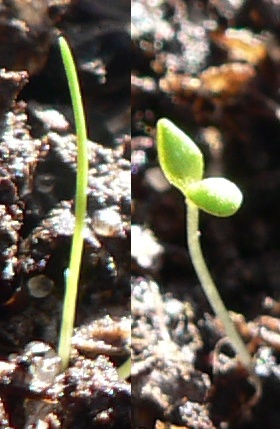
During germination, the seed absorbs water and the root emerges to develop as a simple tap root. This website has a nice diagram that explains some of the features of a young legume plant. The hypocotyl elongates and straightens after penetrating the soil surface. The cotyledons are pulled above the soil surface and open for photosynthesis. The roots continue to grow and start to develop secondary roots. Following this, the first unifoliolate leaf and the first trifoliolate leaf emerge, the main stem then elongates and a leaf is produced at each node. The axillary buds at the cotyledonary nodes form new shoots or branches.

The legume shoots grow the most from the tip of the stems, and the end of branches and stolons, at a place called the terminal bud (or the shoot apex). If the terminal bud is removed, the plant is stimulated to branch out from leaf axils, nodes or the crown.

Leaves develop from primordia (an organ or tissue in its earliest recognisable stage of development) at nodes in the plant. In legumes, cell division and expansion takes place uniformly across the leaflets. Three leaflets are attached to a node. 

The flowering of legumes is influenced mainly by temperature and the length of day. The inflorescence arises from a bud either at the tip of the shoot or the tip of the leaf. Most legumes are cross pollinated by insects.

That's it for this post, if you have any questions please feel free to ask in the comments section below :)


Tuesday, 7 August 2012

Common Pasture Types in Different Regions

Hello :) In this post we'll be looking at some of the common pasture types that can be found in the different regions of Australia. 

The first post for this unit looked introduced us to what pasture is as well as where pastures are used in Australia. I'll be referring to the same diagram as shown below:

Where Pastures are Used in Australia
Source


The northern half of Australia is known as a tropical region while the southern half is referred to as the temperate region. 

Northern Australia

The cattle industry in northern Australia relies heavily on native pastures. This region is dominated by tall perennial grasses such as bluegrass and giant spear grass. Sown tropical pastures in this region include rhodes grass, panic grass and kikuyu which are prominent in more inland areas. 

Southern Australia 

Native species of pasture in the southern half of the country include wallaby grass, weeping grass and redgrass along with silver grass, barley grass and capeweed. 

Temperate Perennial Zone 

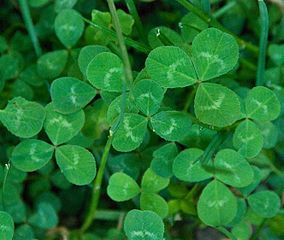
The two most common grasses in these areas include perennial ryegrass (Lolium perenne) and white clover (Trifolium repens). These species, which are well adapted to grazing, experience high production rates and form the backbone of the dairy industry world wide. However, they are only found in areas which receive large amounts of rainfall and require nitrogenous fertilisers. 
White Clover

Perennial Ryegrass

Temperate Perennial Grass - Annual Legume Zone

Phalaris (Phalaris aquatica) is most common here and is the most drought tolerant temperate grass sown in the country. Phalaris is usually sown with subterranean clover (Trifolium subterraneum)

Phalaris
Subterranean Clover


 Annual Temperate Pasture Zone

Subterranean clover and annual medics (Medicago spp) are used together and have been the basis for the legume ley pasture system used in the Australian Wheat belt. Subterranean clover shows an increased resistance to acidic soils while the annual medics produce more hard seed, thus these two types of pasture complement each other.


That's all for this post, if you have any questions please feel free to ask :)